logo

research results

research results

Research Highlights

Activities / Summary of the Project Office

Exo-planet Search Project Office

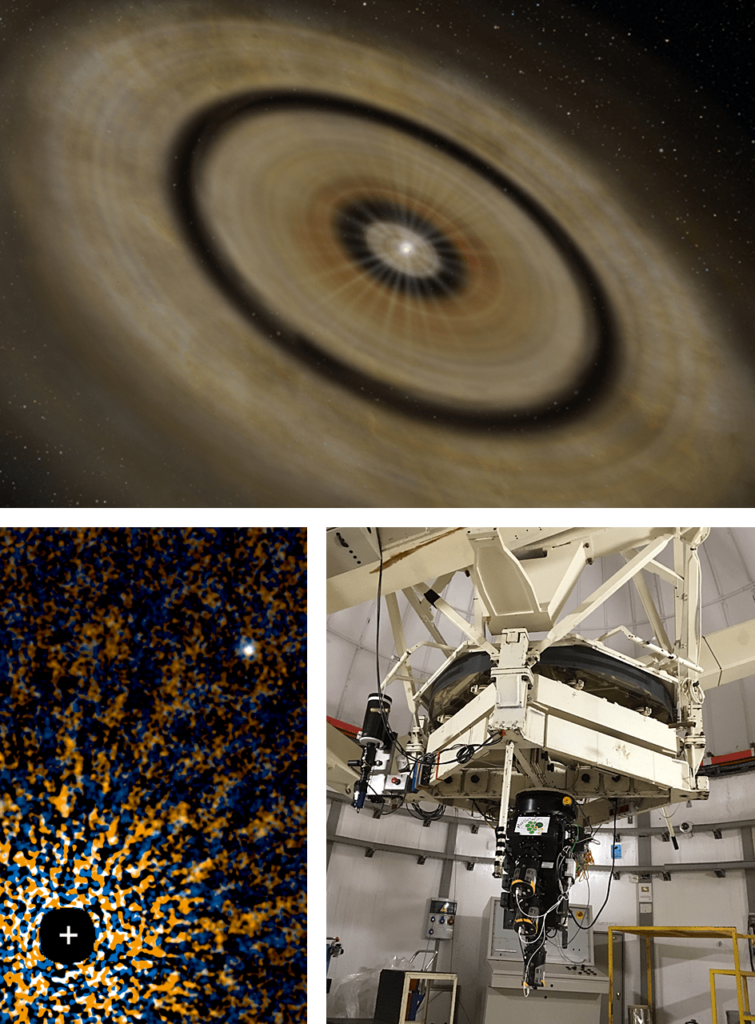

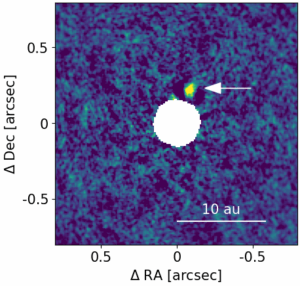
The Exo-planet Search Project Office is taking on the challenge of detecting the “second Earth” around cool stars that have lower mass than the Sun (M-dwarfs) using the near-infrared high-dispersion spectrograph (IRD) developed for the Subaru Telescope at the summit of Mauna Kea in Hawaii. Additionally, we are conducting direct imaging of extrasolar planets and circumstellar disks around central stars (thermal radiation, scattered light, and polarization) using the Subaru Telescope’s extreme adaptive optics system (SCExAO) and integral field spectrograph (CHARIS). Through these observations (high-contrast observations), we are exploring giant planets and protoplanetary disks as the birthplaces of planets. Simultaneously, we are collaborating with international researchers to conduct transit observations and study the atmospheric compositions of exoplanets using the multi-color photometric instrument MuSCAT deployed on domestic and foreign telescopes. We are also conducting detailed observations of disk structures using the ALMA telescope in the Atacama Desert in Chile.

Astrobiology Instrument Project Office

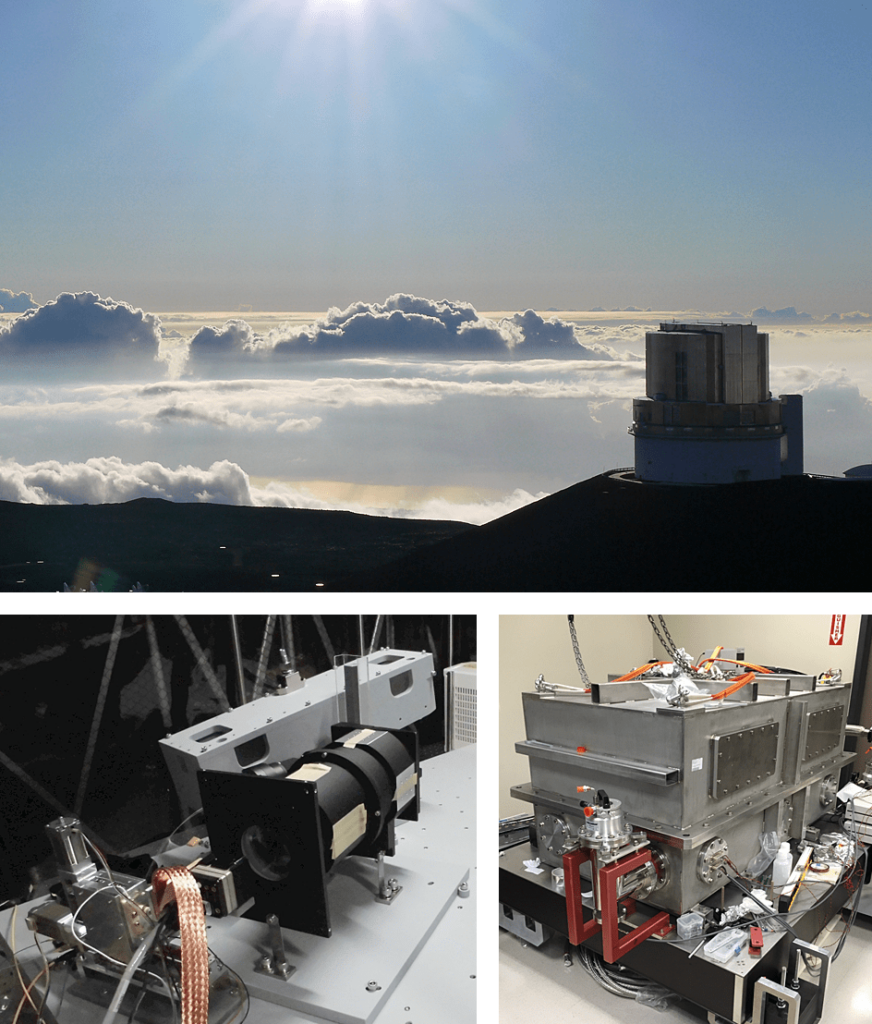
The Astrobiology Instrument Project Office is engaged in the research and development of cutting-edge observation instruments installed on the Subaru Telescope, including SCExAO (an extreme adaptive optics system enabling direct imaging of extrasolar planets and detailed observations of protoplanetary disks) and IRD (a near-infrared spectrograph aiming at discovering terrestrial planets around M-type stars). Furthermore, we are committed to developing instruments for the next-generation 30-meter telescope (TMT) and future space telescope projects aiming to detect terrestrial planets and biosignatures (signs of life). Through this research and development, we are advancing the development of instruments to address fundamental questions; whether we humans are a unique presence in the universe and whether planets capable of supporting life exist beyond Earth.

Exo-Life Search Project Office

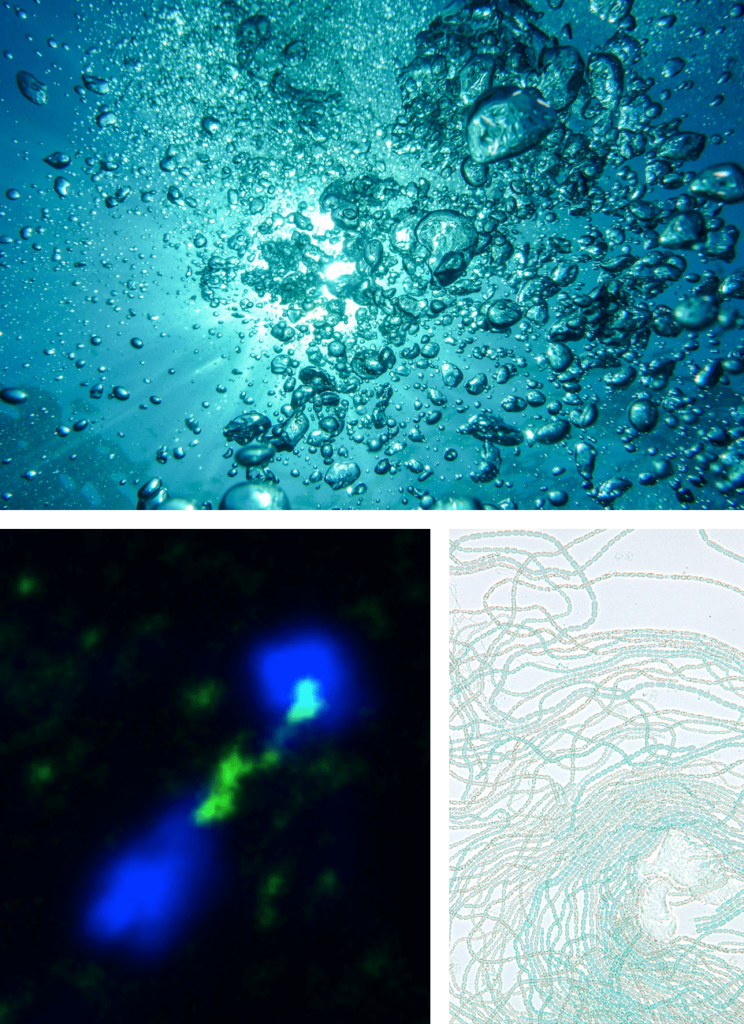
The Exo-Life Search Project Office is searching for amino acids, which are materials for life, by radio observations in interstellar spaces as the initial step to reveal the origin of life in the universe. Additionally, we aim to identify observable biosignatures to investigate the possibility of life on extrasolar planets. We particularly focus on environments different from the Sun (such as planets around cool stars dominated by near-infrared rather than visible light) and study potential biosignatures like oxygen produced through photosynthesis and the red edge (reflectance characteristics of condensing pigments responsible for photosynthesis). We are also advancing fundamental research related to the potential for life within the solar system. To reveal the mysteries of the birth and evolution of life in the universe we aim to apply biology targeting organisms on the Earth (molecular biology, physiology, ecology, and mathematical biology) to astrobiology and progress it.