

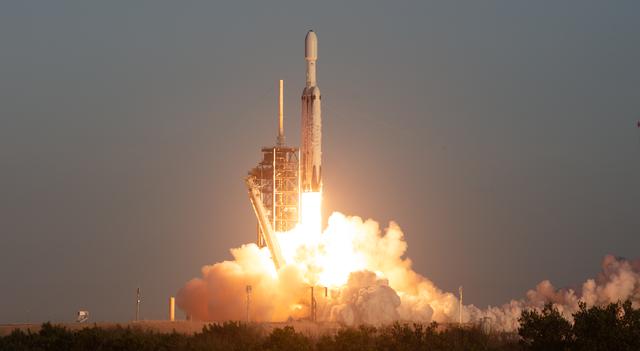
NASA’s Nancy Grace Roman Space Telescope was successfully launched from Kennedy Space Center, Florida, on August 30, 2026 (EDT). The observatory will travel to the Sun-Earth L2 point, approximately 1.5 million kilometers from Earth, where it will undergo about three months of commissioning and instrument calibration. The mission is expected to advance research on exoplanets, cosmic structure formation, dark energy, and many other fields through large-scale survey observations.
From Japan, the Astrobiology Center (ABC), the National Astronomical Observatory of Japan (NAOJ), Osaka University, and other institutions are participating in the mission together with JAXA. ABC has contributed to the development of the Coronagraph Instrument and to preparations for its technology-demonstration observations. Coordinated observations are also planned with the Subaru Telescope and the PRIME Telescope in South Africa. By combining the strengths of space-based and ground-based observatories, researchers aim to achieve new scientific breakthroughs and build expertise for future flagship space telescope missions.
The Roman Space Telescope: Surveying the Universe on an Unprecedented Scale
The Roman Space Telescope is an optical and infrared space telescope equipped with a 2.4-meter primary mirror. Its flagship Wide Field Instrument (WFI) provides image quality comparable to that of the Hubble Space Telescope while observing an area more than 100 times larger in a single pointing.
Major scientific goals include:
• Investigating the nature of dark matter and dark energy through precise measurements of galaxy distributions and cosmic expansion.
• Conducting a large-scale census of exoplanets in the Milky Way using gravitational microlensing and related techniques, thereby clarifying their occurrence rates and distribution.
• Advancing a broad range of astrophysical research through wide-field infrared observations, including studies of galaxy formation, star formation, and Solar System objects.
Contributions from the Astrobiology Center
The Roman Space Telescope also carries the Coronagraph Instrument as a technology-demonstration payload. Coronagraphy suppresses the light of a bright host star, enabling direct observation of its much fainter planets orbiting very close to it.
The Roman Coronagraph Instrument is regarded as a crucial step toward the future Habitable Worlds Observatory (HWO), a next-generation flagship space telescope mission aimed at directly imaging Earth-like exoplanets.
ABC contributed to the development of the instrument and to planning the technology-demonstration observations. ABC researchers, working with industrial partners, were responsible for the fabrication of key coronagraph mask substrates and for the conceptual design of the optical system and the fabrication of optical elements for polarimetric observations. ABC researchers and graduate students have also contributed to planning and preparing future observations of exoplanets and related targets1.
Note
1: Subaru Telescope Research Activities Relevant to Target Selection for the Roman Space Telescope Coronagraph Mission https://www.abc-nins.jp/2025/12/04/10152/
Comments from Project Researchers
The following comments were provided by four Astrobiology Center researchers involved in the Roman Space Telescope mission.
Dr. Naoshi Murakami, Japan Team Lead for the Coronagraph Community Participation Program (CPP)2, who contributed to the development of the coronagraph mask substrates3:
“It is a great honor to be involved in this remarkable mission, which represents an important step toward the future direct imaging of Earth-like planets. I sincerely congratulate the team on the successful launch and look forward to the exciting discoveries that Roman will bring.“
Notes
2: The Coronagraph Community Participation Program (CPP) was established by NASA in 2023 to prepare for Coronagraph Instrument technology-demonstration observations. It includes eleven U.S. teams, members of the Roman Project Team, and international partners from ESA, JAXA, CNES, and MPIA.
3: Dr. Murakami was affiliated with Hokkaido University at the time of his contribution.
Dr. Masayuki Kuzuhara, Deputy Japan Team Lead for the CPP, who has been involved in planning the scientific outcomes of the technology-demonstration observations:
“I am delighted that the Roman Space Telescope was launched safely and on schedule. Operating an instrument capable of detecting circumstellar objects within 0.5 arcsec of their host stars and more than seven orders of magnitude fainter than their host stars is an unprecedented challenge. I am proud to contribute to such an ambitious project and eagerly await the analysis of its exceptional data.“
Dr. Toshiyuki Mizuki, CPP member and co-lead for polarimetric observation planning:
“Since joining the team in 2024, I have worked on data-analysis and calibration software as well as observation planning for polarimetric studies. If all goes as planned, Roman Coronagraph Instrument will achieve contrast levels never before demonstrated. While much work remains before science operations begin, I am delighted to celebrate this important milestone. Go Coronagraph Instrument and Go Roman!“
Dr. John Livingston, CPP member and co-lead for polarimetric observation planning:
“I’ve been genuinely impressed by what this collaboration has built: a codebase of about 100,000 lines, developed across nearly 5,000 commits by about 40 contributors over two and a half years. Coordinating a software effort of that scale to be ready for launch is itself a major achievement, and I’m looking forward to seeing the polarimetric measurements it enables come to fruition.“
Related Link
Roman Space Telescope Launches:Japan and the Subaru Telescope Join the Exploration (NAOJ, Sep. 18, 2026)
https://subarutelescope.org/en/news/topics/2026/09/17/3761.html
References
Nancy Grace Roman Space Telescope (NASA)
https://science.nasa.gov/mission/roman-space-telescope/
Roman Coronagraph Community Participation Program (CPP)
https://sites.google.com/view/roman-cpp/