Abstract:
In the universe, the Earth is the planet where life resides. Oxygen is produced through photosynthesis by plants, and the Earth is rich in oxygen. This is the reason why a wide variety of life, including animals, can exist on Earth. In April 2015, the National Institutes of Natural Sciences (NINS) established the Astrobiology Center to promote research on “life in space” by integrating astronomy and various sciences. A joint research group led by Assistant Professor Kenpo Narita of the Astrobiology Center (concurrently at the National Astronomical Observatory of Japan and the National Institutes of Natural Sciences) and Associate Professor Shigeyuki Masaoka of the Institute for Molecular Science has theoretically revealed that an oxygen-rich Earth-like planet could exist even if life does not necessarily exist on it. The results of this research are the first time that an astronomical observation has been made in the world. This achievement is also noteworthy as a fusion study of astronomy and molecular science, which has not been done before, and indicates the importance of efforts in astrobiology research through collaboration among various academic disciplines. This research was published in the September 10 issue of the British scientific journal Scientific Reports (a sister journal of Nature).
Points and Significance of the Presentation:
- Discovered that photocatalysis of titanium dioxide, which is abundant on Earth-like planets and satellites in the solar system, can generate an oxygen atmosphere on a life-supporting planet outside the solar system that is comparable to that of Earth, even in the absence of life (proposed a new mechanism for generating oxygen atmosphere that has not been considered previously).
- Suggested that the presence of an oxygen atmosphere does not necessarily mean the presence of life when looking for signs of life on exoplanets (discovered that an oxygen atmosphere can be a false detection of life).
- Important to address astrobiology research through collaboration among various disciplines on what constitutes conclusive evidence for the existence of life in order to study whether life exists on exoplanets through future astronomical observations (need for astrobiology research)
Research:
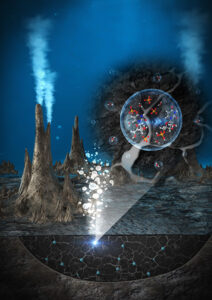
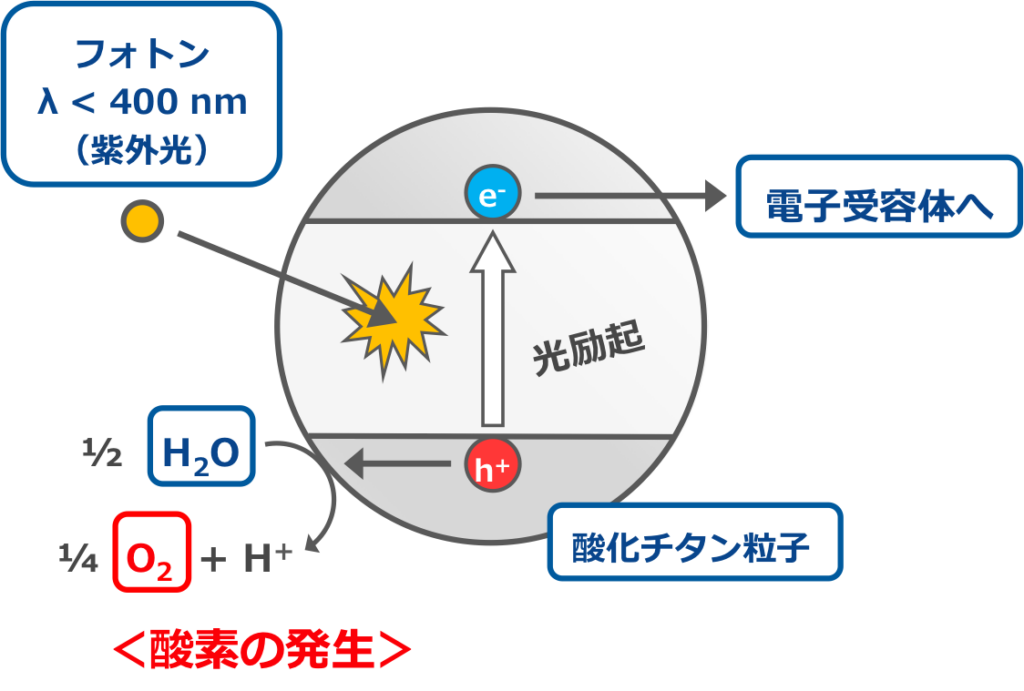
Until now, the existence of photosynthetic life on a planet has been considered a prerequisite for the presence of oxygen on a planet. Currently, the search for life in space is becoming more active. When searching for signs of life on exoplanets, it has been thought that oxygen is a biomarker for life, based on the idea that if there is an oxygen atmosphere, there must be life. However, the impact of non-living chemical reactions on the formation of exoplanet atmospheres has not been well considered. In this study, the research team focused on the non-living generation of oxygen by the photocatalytic reaction of titanium dioxide, which is also abundant on Earth-like planets and satellites in the solar system. The team then estimated that if photocatalysis of titanium dioxide continued on about 0.05% of a planet’s surface layer (less than the area of Hokkaido on Earth), a planet with an environment similar to that of Earth could generate and maintain an oxygen atmosphere comparable to that of Earth today. In addition, by estimating the amount of oxygen that can be produced by the light intensity of stars of various masses and temperatures, we estimated that even for low-temperature stars, where reactions by this mechanism are least likely to occur, a non-living oxygen atmosphere can be produced and maintained if titanium dioxide photocatalysis occurs in about 3% of the planet’s surface layer. This means that photosynthetic organisms can generate and maintain an oxygen atmosphere. In other words, even in the absence of photosynthetic organisms, it is quite possible that a life-supporting planet outside the solar system could generate an oxygen atmosphere comparable to that of the Earth.
Assistant Professor Narita, who led the research team, said, “In order to study whether life exists on exoplanets through future astronomical observations, it is important to conduct astrobiological research that incorporates findings from various academic disciplines to determine what constitutes conclusive evidence for the existence of life. This study has shown that the presence of an oxygen atmosphere does not necessarily mean the presence of life, and it is now necessary to consider new biomarkers. In addition, independent of this study, future astrobiology research should clarify whether oxygenic photosynthesis by photosynthetic organisms is possible in exoplanetary environments and whether life can be born later on a star that retains oxygen generated nonbiologically. We have to find out,” he says.
Publication:
Journal:Scientific Reports
Title: Titania may produce abiotic oxygen atmospheres on habitable exoplanets
Author:Norio Narita 1,2,3, Takafumi Enomoto3,4, Shigeyuki Masaoka3,4,Nobuhiko Kusakabe2
Affiliations 1: Astrobiology Center, 2: National Astronomical Observatory of Japan, 3: SOKENDAI (The Graduate University for Advanced Studies), 4: Institute for Molecular Science
Publication date: September 10, 2015
Published article: http://www.nature.com/articles/srep13977
Related Links:
NAOJ Exoplanet Exploration Project Office Press Release
National Astronomical Observatory of Japan Press Release