Presentation Points:
- Graduate students at the University of Tokyo led the discovery (and demonstration) of 44 new exoplanets at one time. This is the largest number of discoveries in Japan. Another 27 are also promising planet candidates. The fact that graduate students were able to lead this extremely rare achievement of numerous discoveries, excluding the release of candidate objects in units of 1,000 from the dedicated exoplanet satellite project, shows that exoplanet research is a field in which young people can play an active role.。
- The exoplanets discovered are small planets with an average radius of 2 Earth radii around relatively bright stars, which can be studied in detail in the future. The planets include some smaller than Venus.
- The K2 mission using the Kepler space telescope increased the number of exoplanets discovered in various sky regions by about 10%, demonstrating the importance of collaboration between space telescopes and ground-based observations. In particular, the increase in the number of planets around nearby stars, unlike the planets discovered by the Kepler satellites, is important for future detailed observations.
Presentation Summary:
Launched in 2009, NASA’s Kepler Space Telescope has discovered more than 5,000 exoplanets and their candidates in one region of Cygnus. However, due to a failure in 2013, the telescope has since been utilized for a new mission, K2. The K2 mission has so far demonstrated fewer than 300 planets, but more and more diverse planets are needed to be demonstrated.
This time, an international research team led by Dr. Livingston, Prof. Tamura (Director of ABC Center, The University of Tokyo), and Dr. Narita (Assistant Professor, The University of Tokyo) carefully analyzed the raw data from the K2 mission (ultra-precise measurement of stellar brightness) to select more promising planet candidates, and followed up with ground-based imaging observations and spectroscopic observations of the candidate objects. Follow-up observations were conducted by ground-based imaging and spectroscopic observations of the candidate objects, and as many as 44 exoplanets were successfully identified at one time. This is the largest number of exoplanets ever discovered in Japan. This brings the total number of exoplanets demonstrated by the K2 mission to more than 300. It is noteworthy that graduate students were able to take the lead in this extremely rare achievement of a large number of discoveries, excluding candidate releases from the Kepler satellites, which were in the order of 1,000s.
The number of known and demonstrated exoplanets is approximately 4,000, but this discovery is significant in that it has increased the number of bright small planets. One of these planets is smaller than Venus and is located around a red dwarf. This will be an important target for understanding the formation and evolution of terrestrial rocky planets.
The results of this study were published in the Astronomical Journal, an American journal of astronomy, with a lead author, a graduate student at Tohoku University’s Livingston Graduate School of Astronomy.
Announcement Description:
The Kepler Space Telescope has discovered numerous exoplanets and their candidates in one region of Cygnus. It captures exoplanets using a technique called the transit method. This method uses a wide-field camera to continuously image a region of the sky to capture changes in brightness as a planet crosses the front of a star. Space telescopes, unaffected by Earth’s atmosphere, are capable of precisely capturing minute changes in brightness as small Earth-size planets cast shadows on the photosphere of sun-size stars. However, a failure in 2013 forced the Kepler Space Telescope to abandon its original observations, and it has since been resurrected as a new mission, K2, to observe different regions on the ecliptic plane on a seasonal basis. Due to the low resolution of the telescope and the failure of the satellite’s attitude control system, the data analysis for selecting planet candidates requires the latest attention, and follow-up observations, such as high-resolution observations on the ground, are essential to select planet candidates based on the data. However, there has been a need to demonstrate a larger number and variety of planets.
This time, an international research team led by Livingston, Tamura, and Narita of the University of Tokyo successfully demonstrated 44 exoplanets at once based on data from the K2 mission. The team consisted of researchers and students from Italy, Germany, Spain, and the Netherlands, in addition to Japan. This brings the total number of exoplanets demonstrated by the K2 mission to well over 300. Twenty-seven other exoplanets were also promising candidates, and only one other was a false planet. The results were published in the Astronomical Journal, an astronomy journal, with John Livingston, a graduate student at the University of Tokyo, as lead author. Livingston analyzed the K2 satellite data from raw data, which requires complexity and precision. It was painstaking work, with better parameters being identified at each step of the analysis, and sometimes the entire analysis had to be redone. He also proposed various ground-based follow-up observations of the resulting promising planetary candidates, and carried out the execution and data analysis of these observations, while cooperating with the international team.
Follow-up observations were conducted primarily with the telescope at Kitt Peak Observatory in the United States. Seventy-two K2 planet candidates were observed. The technique called “speckle imaging” was used to “freeze” atmospheric fluctuations by short-time integrated observations to obtain sharp images. This is different from adaptive optics, which corrects for atmospheric fluctuations in real time, but it is relatively easy to obtain high resolution images. Although this high-resolution image does not directly image the planet itself, it is a major factor in eliminating the possibility that the planet candidates selected from the K2 data are false planets, such as the presence or absence of nearby stellar mixtures. Spectroscopic observations were also made using the Texas telescope, which allowed us to precisely determine the physical parameters of the main star and, as a result, more precisely determine the size and temperature of the planet. From these high-resolution images and statistical analysis of spectroscopic and transit data, the final planetary demonstration was made.
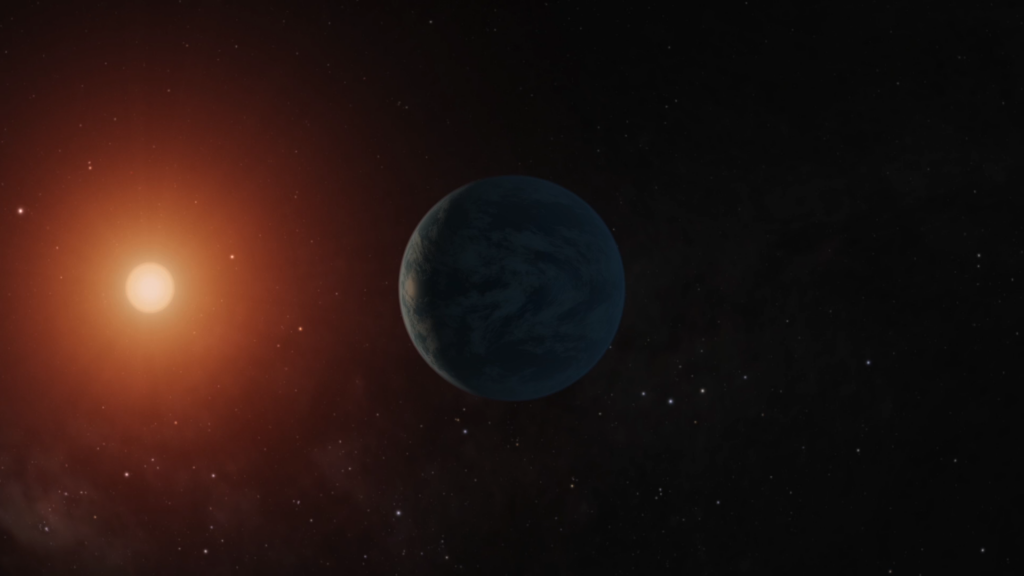
This study is important because it has increased the number of small planets around relatively bright stars. Many of the small planets discovered by the Kepler telescope are too far away and their main stars are too faint for follow-up observations. On the other hand, planets around bright stars are easier to follow up. With this observation, the number of 1-2-Earth radius super-Earths, 2-4-Earth radius small Neptunes, and 4-8-Earth radius small Saturns orbiting bright stars (J-band magnitudes of 8-10 mag at 1.2 μm wavelength) increased by 4%, 17%, and 11%, respectively, compared to the current number of known planets (including those of non-Keplerian satellites). Of these 44 planets, 18 are members of multi-planet systems. Four are ultra-short-period planets with periods of less than one day. Another is a smaller planet than Venus orbiting a red dwarf. These will be important targets for future observations to understand the formation and evolution of terrestrial rocky planets.
Data from the K2 mission will continue to be released, and the team plans to follow up quickly. Similar ground follow-up observations will also be important for data from NASA’s TESS satellite, which was successfully launched in April 2018, so the ground team is expected to play an active role。
Publication:
Journal:“The Astronomical Journal“(Publication date to be determined, publication date to be determined)
Title:44 Validated Planets from K2 Campaign 10
Authors:John H. Livingston, Michael Endl, Fei Dai, William D. Cochran, Oscar Barragan, Davide Gandolfi, Teruyuki Hirano, Sascha Grziwa, Alexis M. S. Smith, Simon Albrecht, Juan Cabrera, Szilard Csizmadia, Jerome P. de Leon, Hans Deeg, Philipp Eigmueller, Anders Erikson, Mark Everett, Malcolm Fridlund, Akihiko Fukui, Eike W. Guenther, Artie P. Hatzes, Steve Howell, Judith Korth, Norio Narita, David Nespral, Grzegorz Nowak, Enric Palle, Martin Paetzold, Carina M. Persson, Jorge Prieto-Arranz, Heike Rauer, Motohide Tamura, Vincent Van Eylen, and Joshua N. Winn
Abstract URL https://arxiv.org/abs/1806.11504
Related Links:
University of Tokyo Press Release